You have found a project you love. The brochure looks stunning, the location is right, and the floor plan seems reasonable. Before you write that booking cheque — there are 25 Vastu factors you need to verify. This checklist will take you approximately 20 minutes to work through. It could save you years of difficulty.
As a PhD in Vastu Shastra who has conducted pre-purchase consultations for clients across Mumbai, Navi Mumbai, and beyond, I can tell you with certainty: structural Vastu doshas discovered after possession are expensive, stressful, and sometimes impossible to correct fully. The same doshas identified before booking cost nothing to avoid — you simply choose a different unit.
This checklist is based on what I check in every pre-purchase Vastu audit. Use it yourself as a starting point. Better yet — book a professional consultation and have every item verified with a compass reading and expert analysis before you sign.
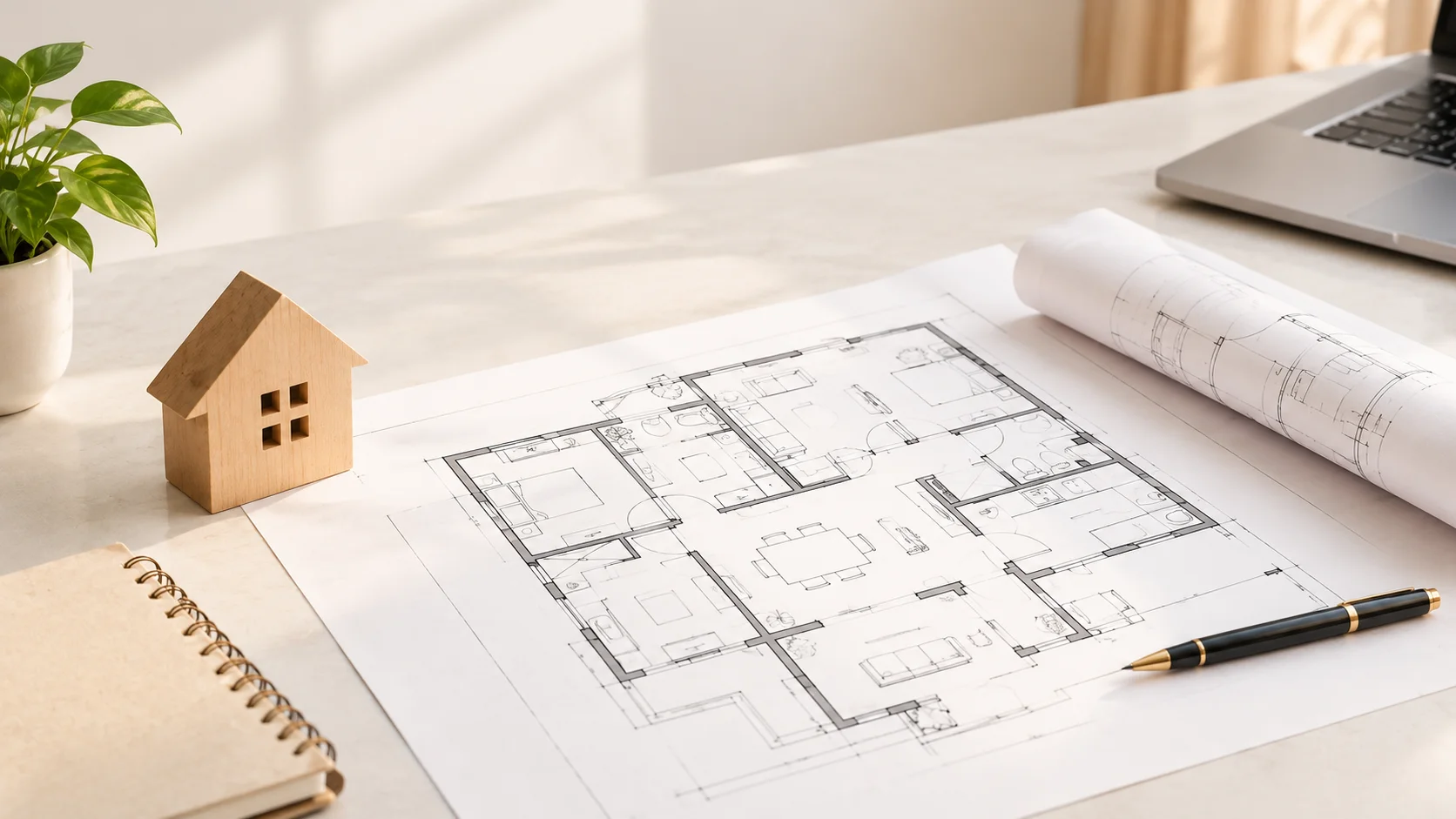
A floor plan review before booking can reveal Vastu issues that would be expensive to correct after possession
The Building Itself Before You Look at Your Flat
Most flat buyers go straight to their unit's floor plan. Before that, spend ten minutes evaluating the building's Vastu at the macro level — these factors affect every flat in the building and cannot be corrected at the individual unit level.
Overall Plot Shape
Ideal: Square or rectangle Avoid: L-shape, T-shape, triangularThe land on which the building stands should ideally be square or rectangular. Irregular shapes — L-shaped, T-shaped, or triangular plots — create missing corners in the Vastu grid, which means certain life areas governed by those zones are energetically incomplete for all residents.
Plot Slope & Land Level
Ideal: Slope towards North or East Avoid: Slope towards South or South-WestVastu Shastra recommends that land slope downward toward the North or East — the directions of water (wealth) and sun (vitality). A slope toward the South-West creates instability and grounding issues for all occupants. In multi-storey buildings this is less critical than in independent houses, but worth checking.
Roads, Temples & T-Junction Facing
Avoid: T-junction directly facing main gate or your flatA Vidhi Shool (road or lane pointing directly at the building or your flat) creates a concentrated rush of aggressive energy hitting the structure. This is one of the most serious building-level Vastu doshas. Similarly, a large temple directly facing your main entrance creates an intense energy field that requires specific management. These are essentially uncorrectable at the flat level.
Water Bodies Near the Plot
Ideal: Water body to North or East of the building Avoid: Large water body to South or South-WestRivers, lakes, ponds, or large open drains near the building affect its elemental energy. Water to the North activates Kubera (wealth) zone powerfully. Water to the South or South-West destabilises the earth element zones that govern stability and long-term accumulation. Coastal buildings near the Arabian Sea (western side of Mumbai) need specific elemental balancing.
Building's Overall Compass Orientation
Ideal: Any orientation with correct internal layoutThe building itself facing North, East, or North-East is traditionally preferred — but this is far less important than your specific flat's entrance direction and internal layout. A South-facing building with a flat whose entrance is in the 4th Pada of South (Grihakshat) is perfectly auspicious. Document the building's overall orientation with a compass before visiting individual units. Read our full article: Is South Facing Flat Really Bad?
The Main Door — The Most Important Factor in Any Flat
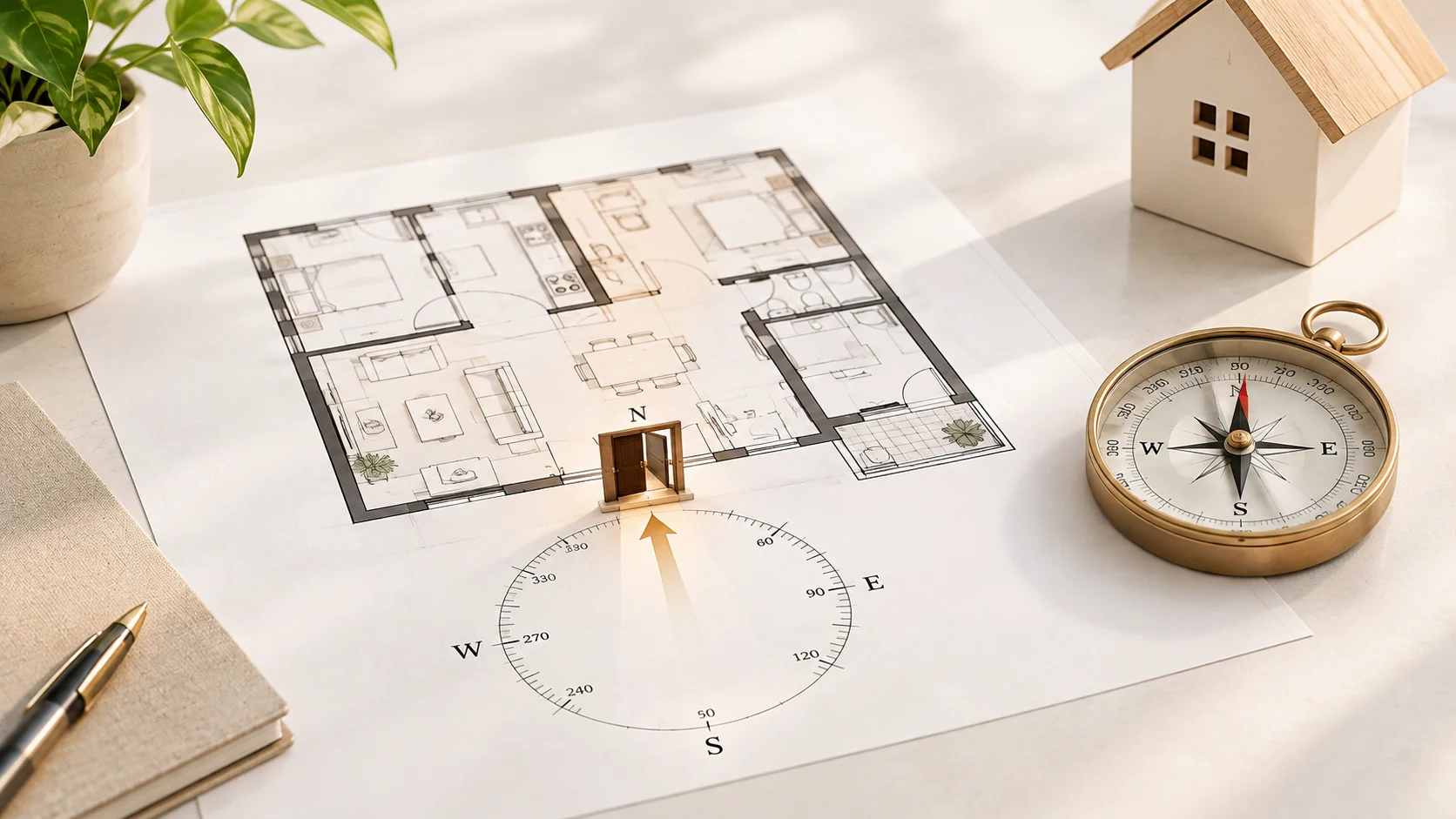
The main entrance direction — measured in exact compass degrees, not just North or South — is the single most impactful Vastu factor in a flat
The main entrance of a flat determines how energy enters the space and which aspects of the occupants' lives are energised or suppressed. It is the single most important Vastu factor — and the most commonly misunderstood.
Exact Compass Pada of Main Entrance
Best: 4th Pada (any direction) · NE padas of North & East Avoid: SW padas of South & WestEach direction is divided into 9 padas (sub-divisions of ~11.2 degrees each). Whether an entrance is auspicious or problematic depends on which pada it sits in — not simply which direction it faces. A South-facing flat with its door in the 4th Pada of South (Grihakshat) is excellent. One in the 7th Pada is genuinely problematic. This requires a physical compass reading — a visual estimate is not sufficient.
No Direct Obstruction Facing the Main Door
Avoid: Pillar, wall, or another flat's door directly oppositeA solid wall, pillar, or another flat's main door directly facing yours within 6–8 feet creates an energy blockage called Dvara Vedha. The incoming energy flow from your entrance is immediately deflected or absorbed. In flat complexes, this is extremely common in corridor-style buildings. Check the corridor layout before booking — ideally your door should not face another door or a structural column directly.
No Staircase Directly Opposite or Overhead
Avoid: Staircase landing directly facing your main doorA staircase descending directly toward your main door is a significant Vastu dosh — energy flows down the stairs and rushes directly at the entrance, creating instability and financial drainage. Similarly, a staircase directly above your main entrance suppresses the beneficial incoming energy. Check the corridor plan and the floor plan of the unit above yours to verify this.
Lobby & Entrance Proportions
Ideal: Open, well-lit lobby area at entrance of flatThe entry area inside the main door — before you step into the living space — sets the tone for how energy distributes through the flat. A cramped, dark, cluttered entry area creates stagnant energy. A flat with even a small but open and well-lit entry lobby has a significantly better Vastu profile than one where the door opens directly into a wall or narrow corridor.
Building Common Entry Direction
Ideal: North or East facing main building gateThe building's main security gate and lobby direction matters too — particularly for ground floor flats and low-floor units. A North or East-facing building entrance activates the wealth and vitality zones of the building's energy field. Check both the building's main entry and your individual flat's entrance direction — both contribute to the overall energy picture.
Let Dr. Joshhii Verify Your Floor Plan Before You Sign
Share the floor plan and building orientation on WhatsApp. Dr. Joshhii analyses all 25 checklist items professionally and tells you exactly which units to prefer — and which to avoid. From ₹4,200. Site Visit & Written report included.
Kitchen Placement — The Most Common Severe Dosh in Indian Flats
In 15+ years of Vastu consultation experience across Mumbai's compact flat stock, the North-East kitchen is the single most common severe Vastu dosh I identify. It appears in nearly 35–40% of all compact 1BHK and 2BHK layouts. It is also the one that causes the most tangible, persistent problems — particularly financial blockages and health issues in female occupants. Read our detailed guide: Kitchen Vastu: Stove Direction Guide.

A kitchen in the South-East is ideal. A kitchen in the North-East is the most common and most serious Vastu dosh in Mumbai's flat stock
Kitchen Zone Position
Ideal: South-East · Good: North-West Avoid at all costs: North-EastThe South-East is governed by Agni (the fire element) and is the natural and ideal position for the kitchen. North-West is also acceptable. The North-East — governed by Ishana (divine energy) — is the most sacred zone, and placing a kitchen there creates direct conflict between fire and divine elements. This is one of the most serious doshas in any home and is very difficult to neutralise without structural changes. If you find a flat with a North-East kitchen, I recommend finding a different unit unless you are fully committed to a significant structural correction budget.
Stove Position & Cooking Direction
Ideal: Stove on South-East wall · Cook facing East Avoid: Cooking facing South or WestEven within a correctly placed kitchen, the position of the stove and the direction you face while cooking matters. The cook facing East activates health, vitality, and abundance. Facing South while cooking is associated with health disturbances. In a flat where the kitchen is correctly placed in the SE but the layout forces the stove to the wrong wall — this is correctable through repositioning during interior work.
Sink & Stove Proximity
Avoid: Sink and stove directly adjacent or facing each otherThe sink represents water (North) and the stove represents fire (South-East). Placing them immediately adjacent or directly opposite each other creates elemental conflict between water and fire — causing financial instability and relationship friction. Ideally, there should be a counter or cabinet separating the sink and stove. This can often be addressed during kitchen design even if the initial layout positions them close together.
Master Bedroom — Stability, Authority & Long-Term Wealth
Master Bedroom Zone
Ideal: South-West · Good: South or West Avoid: North-East, especially for master bedroomThe South-West zone of the Vastu grid governs stability, authority, long-term accumulation of wealth, and the grounding energy of the head of household. The master bedroom here ensures that the most important occupant sleeps in the zone of maximum stability. A master bedroom in the North-East is one of the most problematic placements — the occupant of the divine zone experiences instability, lack of authority, and financial volatility.
Sleeping Head Direction (Bed Orientation)
Ideal: Head pointing South or East Avoid: Head pointing NorthLook at the bedroom layout and identify where a bed can be placed with the head pointing South or East — the auspicious sleeping directions. If the room dimensions or door/window placement forces the bed into a North-heading position only, note this as a correction to make during interior design. This is always correctable — it requires only thoughtful bed placement.
Children's Bedroom Zone
Ideal: West, North-West, or EastThe West zone governs gains, learning, and completion — making it ideal for children's bedrooms. Study tables in children's rooms should face East or North. Check that the bedroom intended for children is not in the South-West (reserve that for the master bedroom) and not in the North-East (too divine, too unsettled for a child's sleep).
No Bedroom Directly Above or Below the Kitchen
Avoid: Bedroom in your flat directly above or below the flat below's kitchenIn a multi-floor building, the fire energy of a kitchen below seeps upward. Sleeping above another flat's kitchen creates an energetically disturbed sleeping zone, especially if it happens to be in a sensitive zone. Check the floor plan of the flat below (the builder can provide a standard floor plan) and cross-reference the kitchen position with your bedroom positions.
Already Booked? Now Is the Best Time for a Vastu Audit
Already booked a flat but haven't taken possession yet? The pre-possession stage is the most cost-effective time to get a Vastu analysis — interior work hasn't been fixed yet, so corrections are significantly cheaper to implement. Book a pre-possession Vastu audit and get your interior layout right from day one.
The Zones That Determine Everything Else
North-East Zone — Free & Sacred
Ideal: Open, light, pooja room, or study corner Never: Kitchen, toilet, or heavy storage hereThe North-East zone (Ishaan) is the most sacred zone in any property — governed by Jupiter and Lord Shiva. It must remain the lightest, cleanest, most open corner of the flat. The worst placements here — kitchen or toilet — create the most serious Vastu doshas. Identify the North-East corner of the flat on the floor plan. What is there? If it is a kitchen or toilet, this is a severe structural dosh. If it is open, a balcony, a small pooja corner, or a study — excellent.
Brahmasthan — The Sacred Centre
Ideal: Open space, no structural elements Avoid: Support columns, toilets, or heavy storage in centreThe geometric centre of the flat — the Brahmasthan — must remain completely open and unobstructed. In many modern flats, structural support columns are placed in the centre of the flat for engineering reasons. A column in the Brahmasthan is a serious Vastu dosh — it suppresses the central life force of the home. Check the structural drawing or visit the flat and physically identify whether any column, permanent wall, or toilet sits in the exact geometric centre.
Toilet Positions
Best: North-West or West Avoid: North-East and South-WestAll toilets in the flat must be mapped on the Vastu grid. A toilet in the North-East (divine zone) suppresses spiritual and financial energy severely. A toilet in the South-West (stability zone) creates persistent grounding and authority problems for the head of household. The North-West zone is ideal for toilets — it governs movement and drainage, which is perfectly aligned with a bathroom's function. Map all bathrooms on the Vastu grid before purchasing.
Pooja Room or Prayer Space
Ideal: North-East zone · Good: EastIf a dedicated pooja room is shown on the floor plan, check its position. North-East is ideal. East is good. North-West is acceptable. The worst positions for a pooja room are the South or South-West — these fire and earth zones conflict with the sattvic (pure) energy required for worship. If the flat has no dedicated pooja room, identify which corner could serve as a pooja space and verify it is not in a conflicting zone.
Overhead Water Tank Position
Ideal: South-West zone of terrace/building Avoid: North-East of terraceThe overhead water tank should ideally be in the South-West zone of the rooftop or terrace — the heavy earth zone that can support the weight and water element. A water tank in the North-East creates elemental conflict (water is welcome in NE, but an overhead tank suppresses this zone with its mass). For top-floor flat buyers especially, check the builder's terrace plan for tank placement.
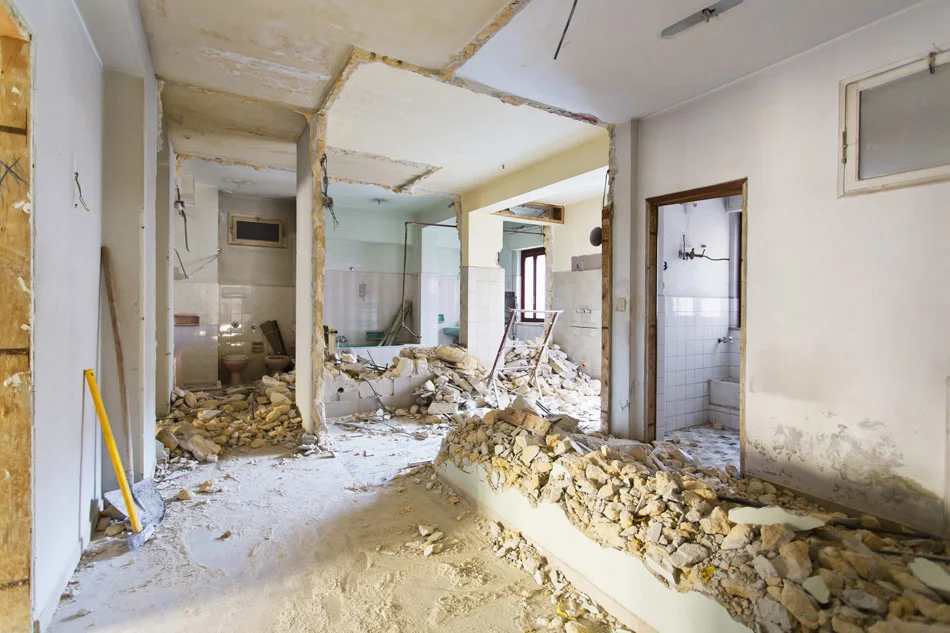

Left: Structural corrections after possession are expensive. Right: Pre-possession stage allows corrections before interior work is finalised — significantly cheaper.
Three More Things Most Buyers Never Check
Numerological Compatibility of Flat Number
Ideal: Flat number that reduces to 1, 2, 3, 5, or 6The flat number carries a Numerological vibration that interacts with the occupants' personal numbers. Add all digits of your flat number to a single digit. Generally, numbers reducing to 1 (leadership), 2 (harmony), 3 (growth), 5 (versatility), or 6 (family and love) are well-suited to residential use. Numbers reducing to 4, 8, or 9 can work well with the right personal numerology but carry specific characteristics. Share your flat number and all occupants' birth dates with a Numerologist for a personalised assessment.
Floor Level & Corner vs. Middle Unit
Ideal: Higher floors for vayu (air) energy · Corner flats for more open zonesFloor level affects the elemental energy of a flat. Ground floor and lower floors have stronger earth energy — good for stability but can feel heavier energetically. Higher floors have more vayu (air and movement) energy — lighter, more expansive. Corner flats have more open zones on two sides and typically benefit from better natural light and cross-ventilation. Middle units are surrounded by other flats — less natural element contact but good insulation of energy. Neither is inherently better — depends on occupants' numerology and personal energy needs.
Auspicious Booking Time & Muhurat
Ideal: Book on a Shubh Muhurat (auspicious date/time)The moment you sign the booking form is energetically significant in Vedic tradition. Booking during an auspicious time — aligned with your personal numerology and planetary positions — sets a positive foundation for the entire homeownership journey. This is easily verified with your birth date: certain days of the week, tithi (lunar day), and time windows are more favourable than others. Consult Dr. Joshhii to identify the best booking muhurat for your property.
Don't Leave Your Home's Energy to Chance
A professional pre-purchase or pre-possession Vastu audit by Dr. Piinal Joshhii covers all 25 items on this checklist — with a compass reading, floor plan analysis, and written report. Site Visit from ₹4,200. On-site also available across Mumbai.